

Have you ever noticed how a small problem can feel enormous the more you dwell on it? Maybe it was a disagreement with a friend, a minor mistake at work, or an unpaid bill you kept replaying in your mind. What started as a single thought suddenly snowballed into stress, worry, and sleepless nights. That’s the power of focus. The things we choose to focus on, consciously or unconsciously, don’t just occupy our minds—they shape the way we experience the world.
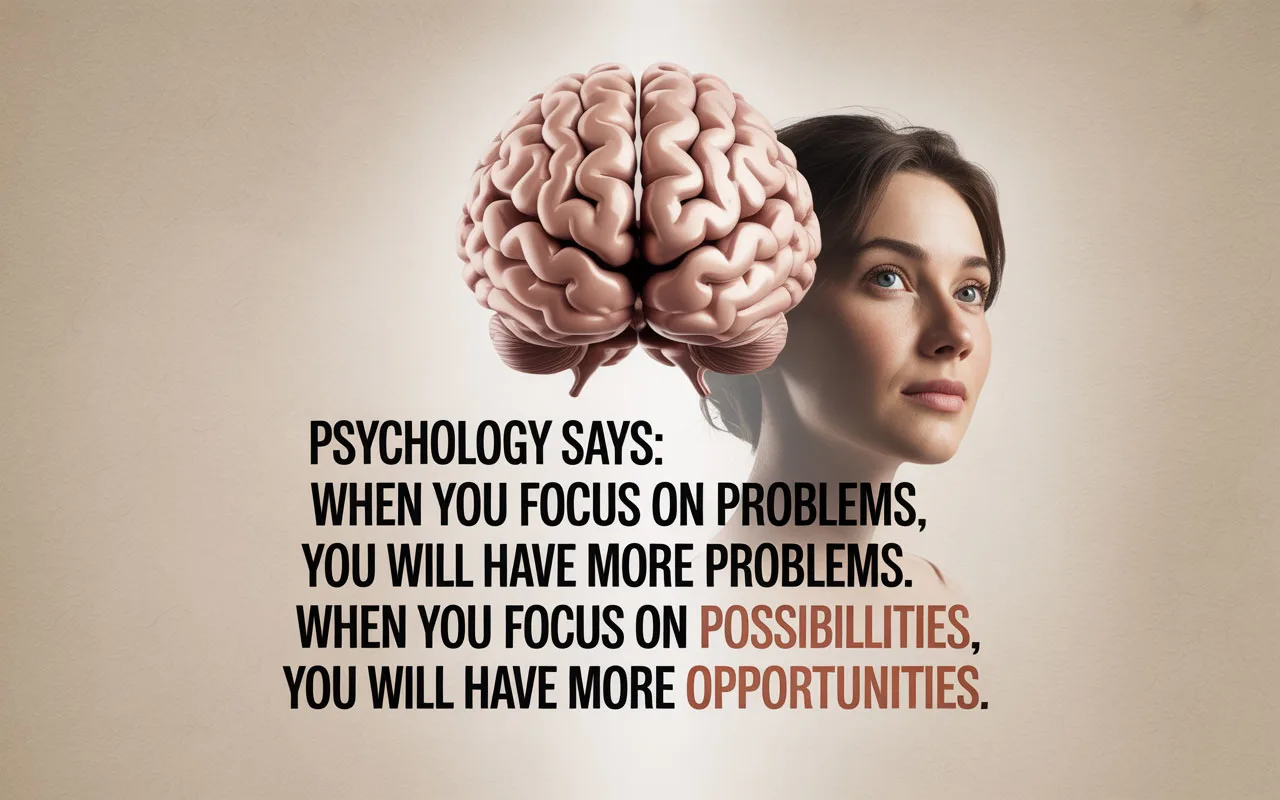
Psychologists often say, “What you focus on expands.” This simple phrase reveals something profound about the mind: your attention acts like a magnifying glass. When you point it at problems, they grow larger and more consuming. But point it toward opportunities, and your life starts to look very different.
The Mental Weight of Problems
Our brains are wired for survival, not happiness. This is why we’re naturally drawn to threats, mistakes, and dangers—a phenomenon called negativity bias. Thousands of years ago, noticing danger quickly was essential. In today’s world, however, that bias often works against us.
Imagine this: you get feedback from your boss, 90% of it positive, but one small critique steals the spotlight. You replay that single comment for days, questioning your worth. This reaction is perfectly normal, but it’s also draining. When your mind constantly circles around problems, you’re essentially training yourself to see more of them.
On a biological level, this focus triggers your body’s stress response. Cortisol levels rise, your heart rate increases, and your ability to think creatively shrinks. The more time you spend focusing on stressors, the more trapped you feel. Problems start to feel bigger than they are because your mind is feeding them with attention.
Why Possibilities Are a Game-Changer
Now, let’s flip the script. What happens when you focus on possibilities instead of problems?
Think of attention like sunlight. Wherever you shine it, things grow. By consciously choosing to focus on solutions, growth, and hope, you retrain your brain to scan for opportunity rather than danger. Psychologists call this positive neuroplasticity—the brain’s ability to rewire itself based on what we practice.
For example, let’s say you’re facing a financial setback. You could spiral into fear, convincing yourself it’s the end of the world. Or, you could pause, breathe, and ask: What opportunities does this situation create? Maybe it pushes you to learn budgeting skills, start a side hustle, or finally launch that business idea you’ve been sitting on.
Focusing on possibilities doesn’t mean ignoring problems; it means choosing to see beyond them. It’s not about toxic positivity or pretending everything’s fine. It’s about building mental resilience, training your mind to balance realism with hope.
A Real-Life Example: From Roadblocks to Breakthroughs
Take Sarah, a small business owner I met at a networking event. A few years ago, she lost a major client that made up nearly 40% of her revenue. Understandably, she panicked. But instead of staying frozen in fear, she reframed the setback. “I realized I’d put all my eggs in one basket,” she told me. She used the loss as motivation to diversify her client base, improve her offerings, and invest in marketing. Today, her business is stronger than ever.
Sarah’s story illustrates a simple truth: focusing on problems keeps you stuck, while focusing on possibilities opens doors.
Practical Tips to Train Your Focus
Shifting focus isn’t about sheer willpower—it’s about building habits that support a new mindset. Here are a few strategies you can start practicing today:
- Practice Gratitude Daily
Spend two minutes a day writing down three things you’re grateful for. This simple act rewires your brain to scan for positives. - Reframe Challenges as Lessons
Instead of asking, “Why is this happening to me?” ask, “What is this teaching me?” - Set ‘Solution-First’ Goals
Whenever a problem arises, write down three potential solutions before letting yourself dwell on it. - Surround Yourself With Growth-Minded People
Your focus is heavily influenced by your environment. Spend time with those who see possibilities rather than roadblocks. - Practice Mindfulness
Meditation or even a few minutes of deep breathing can help break the cycle of overthinking and refocus your mind.
The Ripple Effect of Focus
When you train your brain to focus on possibilities, your entire world shifts. You become calmer, more confident, and more resilient. People around you notice your energy and are drawn to it. Problems don’t disappear, but they stop feeling like immovable mountains. Instead, they become stepping stones.
Think of your mind like a camera lens: you can zoom in on flaws and imperfections, or you can pull back and see the whole beautiful picture. The choice is yours, and it’s one you can make every single day.
Your thoughts shape your reality more than you may realize. By shifting your focus from problems to possibilities, you’re not just changing your perspective—you’re reshaping your future. Start small. Train your mind to see opportunities, celebrate progress, and approach life with curiosity. Over time, this simple mindset shift can transform everything.